Accelerate Your Credit Union’s Growth with Trusted Data Insights and Advanced Analytics


Make Confident, Data‑Driven Decisions with Proven Analytics

Real Results with Arbutus Analytics

"At Virginia Credit Union, Arbutus Technology has allowed us to automate monthly data analytics surrounding certain branch and loan activity using scripts that have been written.  We also use it to perform analytics and select samples on individual audit projects.  Being able to focus on outliers and anomalies provides efficiency on audits when you have a small audit team."
 

-— Kenya Maddox, Virginia Credit Union

 Advanced Analytics with Automation and AI

Credit unions hold significant volumes of member, loan, transaction, operational, and financial data. When that data is analyzed in a governed and repeatable way, it can reveal meaningful insights into member behavior, loan performance, operational exceptions, fraud indicators, control gaps, and emerging risk trends. This helps teams move beyond manual review and sample-based testing toward broader, population based assurance.
 
Arbutus supports this shift by enabling credit unions to build repeatable analytics, automate recurring testing, preserve evidence, and produce defensible results that can support management oversight, internal audit, compliance, and regulatory examination readiness. Rather than relying on disconnected spreadsheets or one-off reporting, teams can standardize analytics that are easier to rerun, review, document, and share.
 
When applied within a governed analytics framework, AI can help surface patterns, exceptions, and member behavior insights that support more personalized engagement, improved service delivery, and a stronger overall member experience.
Virginia Credit Union Access Credit Union Tower Federal Credit Union

The Arbutus Technology Advantage

The focus on community has always been at the heart of these financial institutions, but as the financial landscape evolves, data has become a crucial tool for staying competitive and meeting member expectations. In the past, basic systems were used to track loans and ensure compliance. Today, advanced analytics provide deeper insights, enabling organizations to take a more proactive approach to service and risk management.

Credit Union Analytics Insights eBook

A Few Hurdles for Credit Unions

  • Fragmented Systems Disconnected banking core, lending, payments, ATM, investment and third-party systems create data silos that hinder enterprise visibility, slow analysis, and limit the credit union’s ability to generate timely, actionable insight.

  • Data Quality Challenges Inconsistent, incomplete, or poorly governed data across systems makes it difficult to rely on analytics results with confidence, increasing manual validation effort and limiting scalability.

  • Reactive Risk and Member Management Without predictive insight, many credit unions address risk and member issues after they occur rather than proactively identifying emerging risks, member disengagement, or  financial stress.

  • Basic Tools: Without advanced analytics, credit unions couldn’t combine and leverage full data populations across platforms to their full potential.

Credit union
Risk Management and Fraud Detection


Advanced analytics allows credit unions to identify and manage risks like fraud, loan defaults, and inefficiencies by analyzing both historical and real-time data. Application of future trend analysis help spot potential issues before they arise, offering a proactive approach to managing risk.

Elevating Member Services & Experience


Analytics also helps credit unions tailor services to meet individual member needs, resulting in greater engagement and satisfaction. By analyzing member behavior and financial health, credit unions can offer personalized solutions that enhance both service quality and member loyalty.

Improving Operational Efficiency & Strategic Decisions


Using analytics, credit unions can optimize day-to-day operations, allocate resources more effectively, and make strategic decisions based on accurate data. Real-time dashboards and scenario modeling give leadership a comprehensive overview of performance, enabling smarter, data-driven choices.


Turn Data Into Better Decisions

Confident decisions start with reliable data. Arbutus helps credit unions uncover meaningful insights, improve audit and testing processes, and support compliance initiatives with greater efficiency. Speak with our specialists to explore how Arbutus can support your analytics strategy.

Book a Demo

Understand the Key Risk Areas that Impact Long-Term Stability

Financial institutions face various strategic risks that can significantly affect their ability to remain stable and sustainable.

Senior management in critical areas such as Internal Audit, Risk & Compliance, Corporate Security, Credit, Operations, and IT must implement effective measures to manage risks in their respective domains. By doing so and regularly testing controls, credit unions can ensure long-term stability and provide reliable services to their members.

Proactive Risk Management with Analytics enables timely interventions, minimizing disruptions and ensuring that the organization remains focused on its core mission: 'Delivering exceptional service to its members'.

Business Area

Member Experience and Segment Risk

Member experience and segmentation risk represents the potential for financial loss, reputational harm, or supervisory findings arising from ineffective segmentation of the membership base, inadequate understanding of member needs and behaviors, or inconsistent execution of onboarding, servicing, and engagement processes across member segments. 

Within U.S. credit unions, deficiencies in segmentation practices or member experience controls may result in disparate member outcomes, increased attrition, constrained growth, or consumer harm. These issues may draw regulatory scrutiny under National Credit Union Administration (NCUA) supervisory expectations and, where applicable, Consumer Financial Protection Bureau (CFPB) consumer-protection expectations, particularly with respect to fair treatment, transparency, and consistency in member-facing processes. 

Effective management of this risk requires data-driven member segmentation, consistent execution of member facing activities, and continuous monitoring of member interactions and outcomes.

This enables credit unions to validate that products, services, communications, and onboarding processes are delivered consistently across segments, support member financial well-being, and align with consumer-protection and supervisory expectations. 

Member Services

Examiner Value
This enables examiners to assess transparent, repeatable segmentation and member-experience testing,
supported by population-based analytics, preserved evidence, and clear linkage to fair-treatment and consumer-protection oversight.

Management Value
This provides management with timely insight into member behavior, experience, and outcomes across
segments, enabling proactive identification of emerging risks, inconsistent treatment, and opportunities to improve member financial well-being, engagement, and retention.

Example Analytics and Testing (with Arbutus) 

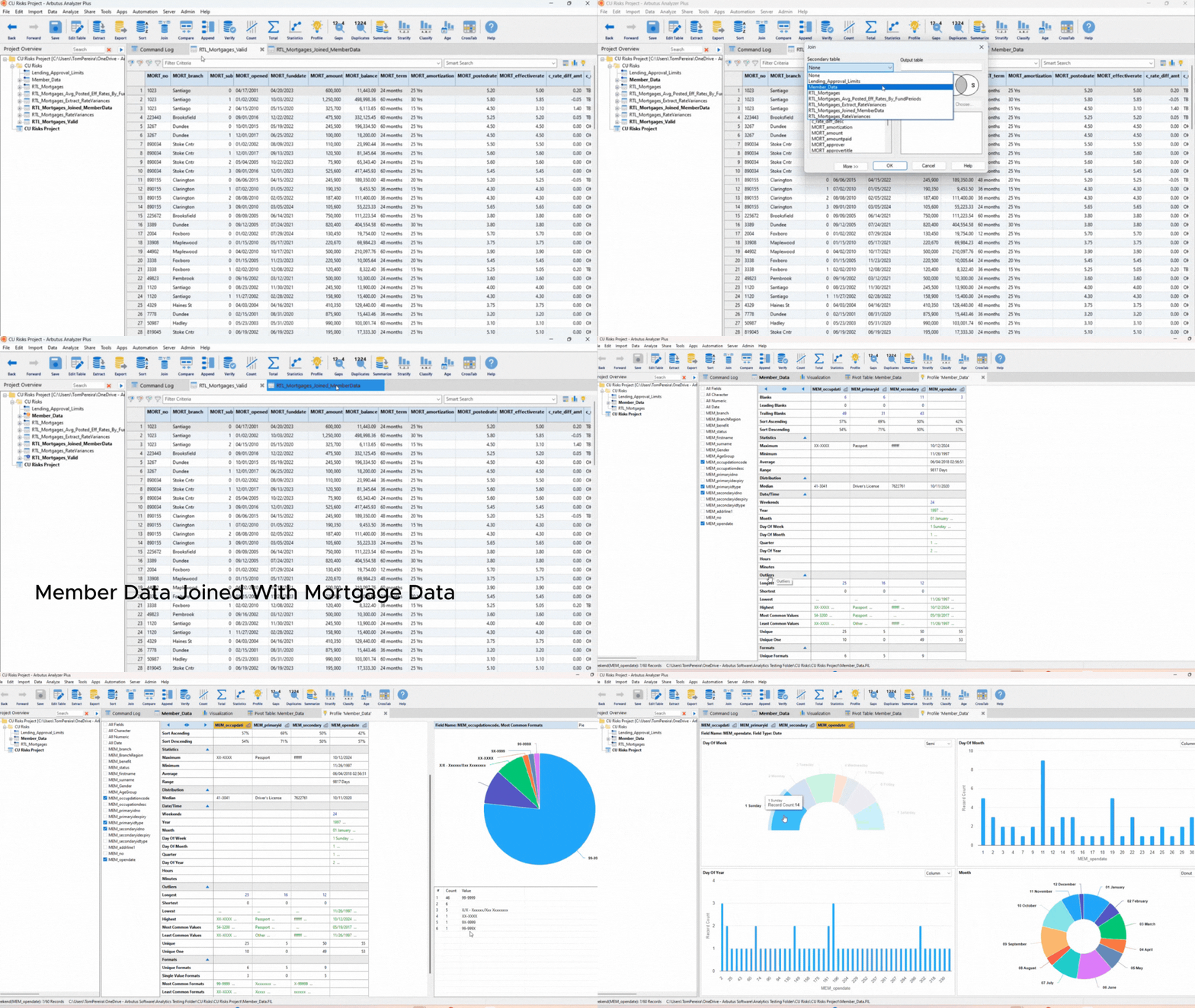
» Member segmentation analytics to classify members by demographic, behavioral, financial, and lifecycle attributes, and to monitor changes and trends over time

» Population-based testing of segmentation accuracy and completeness, identifying misclassified,
unsegmented, or inconsistently segmented members

» Clustering and outlier analysis (including AI/ML-supported techniques, where appropriate) to identify underserved segments, anomalous member experiences, or emerging risk patterns

» Analysis of onboarding and member-interaction touchpoints by segment, validating consistency, 
timeliness, and completeness of key onboarding and servicing activities

» Monitoring of member experience indicators by segment, including service interactions, complaints, escalations, and resolution outcomes

» Member attrition and retention analytics, segmented by demographics, product usage, tenure, and risk profile, to identify drivers of disengagement and churn

» Evaluation of product alignment with member financial well-being, assessing product usage, pricing, and outcomes across defined member segments

» Testing for inconsistent treatment or outcomes across segments, supporting fair-treatment monitoring, Unfair, Deceptive, or Abusive Acts or Practices (UDAAP) oversight, and  consumer-protection expectations

» Repeatable, scheduled analytics to support continuous monitoring rather than point-in-time reviews

» Preservation of segmentation logic, testing parameters, and supporting evidence to support, examiner review, independent re-performance, and longitudinal analysis


Credit, Counterparty, and Interest Rate Risk

Credit, counterparty, and interest rate risk represent the potential for losses, supervisory findings, or safety-and soundness concerns arising from a member’s or counterparty’s failure to meet contractual obligations and from adverse movements in interest rates that affect earnings, capital adequacy, and overall financial performance.

Within U.S. credit unions, deficiencies in credit underwriting standards, exception and override management, pricing governance, or interest rate application may result in elevated delinquencies, credit losses, revenue leakage, earnings volatility, and increased supervisory 
scrutiny.

Effective management of credit and interest rate risk requires well-designed credit policies, consistent execution of underwriting and approval controls, accurate and timely application of pricing and fees, and continuous, data-driven monitoring to identify emerging risks, policy deviations, and control weaknesses in advance of regulatory thresholds or adverse financial impact.

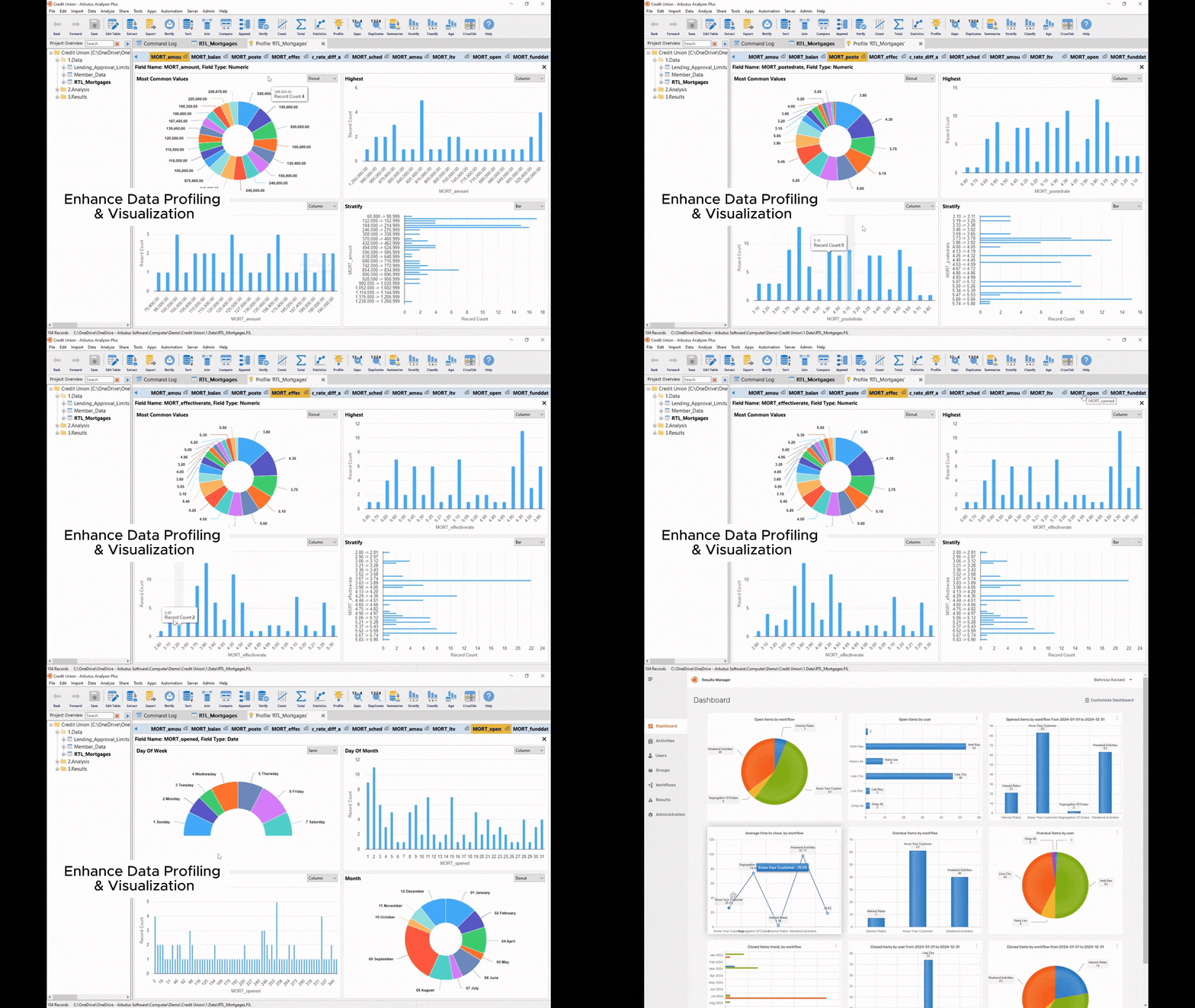
Data Profiling and Viz

Examiner Value 
This enables examiners to assess consistent, population-based testing of credit and interest rate risk, supported by documented underwriting, pricing, and exception logic, preserved evidence, and 
repeatable analytics supportive of safety-and-soundness expectations.

Management Value 
This provides management with timely, data-driven insight into credit quality, pricing accuracy, exceptions, and emerging concentration or interest rate risks, enabling proactive intervention before losses, earnings volatility, or supervisory thresholds are reached.


Example Analytics and Testing (with Arbutus) Aligned with NCUA supervisory and examination expectations

» Population testing of loan delinquencies and defaults, including trend analysis by product, risk grade, collateral type, geography, and member segment

» Validation of underwriting compliance, testing loan approvals, credit policy adherence, and identification of exceptions and overrides

» Exception and override analytics, assessing approval authority, rationale, and frequency of policy deviations

» Interest rate application testing, recalculating pricing, repricing logic, and rate adjustments to identify misapplication or inconsistencies

» Fee and revenue leakage testing, validating accurate assessment, charging, and waiving of interest, penalties, and fees

» Counterparty exposure and performance analysis, identifying concentrations, performance trends, and emerging risk within investment and contractual counterparties

» Credit concentration analytics, assessing exposure by borrower type, product, industry, collateral, or geographic region

» Trend analysis of credit quality indicators, including delinquency migration, charge-offs, recoveries, and non-performing assets

» Data quality testing for credit and pricing data supporting underwriting, servicing, and regulatory reporting

» Reconciliation of credit and interest data between loan systems, sub-ledgers, and the general ledger

» Repeatable, scheduled analytics to support continuous monitoring rather than point-in-time reviews

» Preservation of audit logic, parameters, and evidence to support examiner review, independentre-performance, and longitudinal analysis


Regulatory & Compliance Risk

Regulatory and compliance risk represents the potential for supervisory findings, enforcement actions, financial penalties, member remediation, or reputational damage arising from ineffective design or execution of controls supporting compliance with applicable laws, regulations, supervisory guidance, and internal policies.

Within U.S. credit unions, this risk spans safety and soundness, consumer protection, financial crime prevention, and operational resilience, and is a core focus of NCUA, CFPB, FinCEN, and FFIEC examinations. 

Effective management of regulatory and compliance risk requires well-defined compliance frameworks, appropriately designed and implemented controls, and continuous, data-driven testing to validate that controls are operating effectively. This includes the ability to demonstrate timely identification,  escalation, and remediation of compliance issues and to evidence ongoing alignment with evolving supervisory expectations.

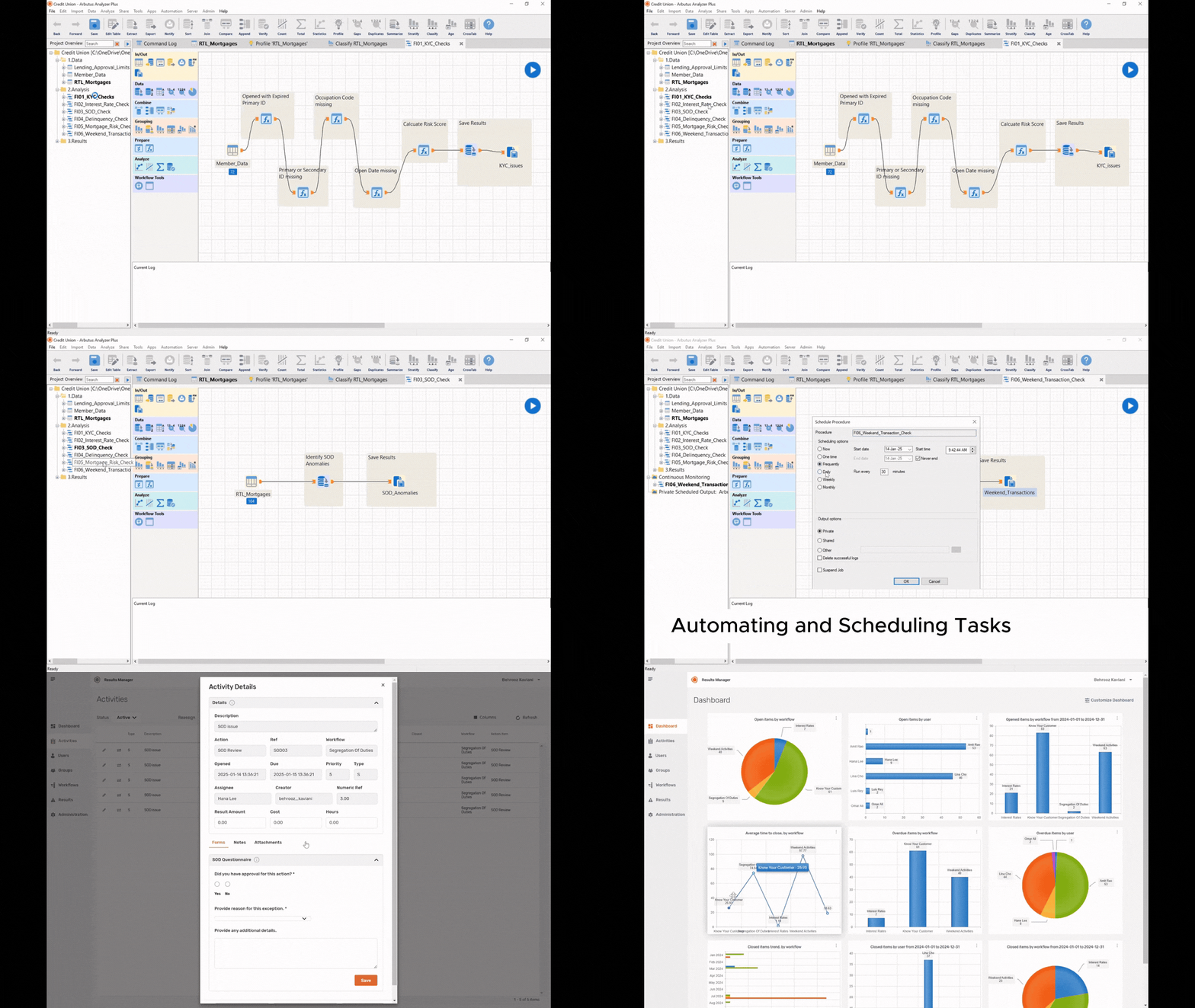
Reg. & Compliance - Automating & Scheduling

Examiner Value 
This enables examiners to assess transparent, repeatable, population-based testing of regulatory and 
compliance controls, supported by documented methodologies, preserved audit logic, and defensible 
evidence supportive of NCUA, CFPB, FinCEN, and FFIEC supervisory expectations. 


Management Value 
This provides management with timely, data-driven insight into compliance control effectiveness, 
emerging regulatory risks, and issue remediation trends, enabling proactive intervention ahead of 
supervisory findings, enforcement actions, or member impact.

 
Example Analytics and Testing (with Arbutus)
Designed to support testing and monitoring activities commonly associated with NCUA, CFPB, FinCEN, and FFIEC supervisory and examination expectations 

» Population-based testing of regulatory controls across safety and soundness, consumer compliance, Bank Secrecy Act / Anti-money laundering (BSA/AML), and operational risk domains 

» Continuous monitoring of compliance indicators to identify emerging risks, trends, or deviations from regulatory requirements 

» Validation of regulatory reporting accuracy, reconciling Call Reports, Cash Transaction Reports (CTRs), Suspicious Activity Reports (SARs), and other filings to source systems and underlying data 

» Testing of policy and procedure adherence, identifying gaps between documented requirements and operational execution

» Exception and issue management analytics, tracking repeat findings, overdue remediation, and root causes

» Data quality testing for regulatory-relevant data elements supporting reporting, monitoring, and compliance decision-making

» Cross-regulatory impact analysis, identifying where control failures affect multiple regulatory obligations simultaneously 

» Repeatable, scheduled analytics to support continuous assurance rather than point-in-time reviews

» Preservation of audit logic, testing parameters, and evidence to support examiner review,  independent reperformance, and longitudinal analysis

» Issue trend and severity analysis to support risk assessments, audit planning, and regulatory engagement

» KYC and member identification processes assessed across segments to ensure consistent application of Customer Identification Program (CIP) / Customer Due Diligence (CDD) requirements, appropriate risk profiling, and a seamless onboarding experience without undue friction or gaps in due diligence

» Data quality profiling of inputs used in Know Your Customer (KYC) and Customer Identification  program (CIP) processes, including completeness, accuracy, consistency, and missing-information checks


Empower Your Credit Union with Trusted Data

Gain deeper visibility into your operations, strengthen compliance efforts, and deliver better member experiences with Arbutus Data Analytics Software. Connect with our team to discuss your goals and discover how Arbutus can help enhance testing, reporting, and analytics across your organization.

Request a Trial


Operational Risk

Operational risk represents the potential for financial loss, supervisory findings, or service disruption arising from ineffective design or execution of internal controls supporting core operational processes. 

Within U.S. credit unions, operational risk is a key supervisory focus where deficiencies in process discipline, data quality, system interfaces, or control execution may impair safety and soundness, member outcomes, or regulatory compliance. 

Effective operational risk management requires repeatable, population-based testing of operational controls; strong data governance across member, account, and transaction data; and continuous monitoring to identify control breakdowns, process deviations, and emerging risk trends in a timely and 
defensible manner.

Operational Risk - Credit Union Data Analytics

Examiner Value 
These analytics and testing activities provide repeatable, population-based assurance that operational 
controls are appropriately designed, consistently executed, and effectively monitored—supporting 
safety and soundness, reliable member services, and reduced operational risk findings during NCUA and 
FFIEC supervisory expectations. 


Management Value 
The analytics and testing framework described above provides management with timely, data-driven 
insight into process execution, data quality, and emerging operational risks, enabling proactive 
remediation of control breakdowns before service disruption, member impact, or supervisory findings.

 
Example Analytics and Testing (with Arbutus)
Designed to support testing and monitoring activities commonly associated with NCUA and FFIEC supervisory and examination expectations. 
Focus: Process integrity, control execution, data quality, service continuity 

» End-to-end transaction lifecycle testing across member onboarding, account maintenance, transaction processing, and account closure 

» Policy and procedure adherence testing to identify deviations in execution across branches, departments, or back-office processing units 

» Exception population analysis to detect systemic process breakdowns rather than isolated or anecdotal errors
» Trend analysis of operational exceptions to identify recurring issues, root causes, and emerging operational risks

» Segregation-of-duties (SoD) testing across transaction initiation, approval, posting, and reconciliation activities

» Reconciliation testing between operational systems, sub-ledgers, and the general ledger to identify breaks, manual adjustments, or data inconsistencies

» Data quality profiling of member, account, and transaction data supporting operational processes and downstream reporting

» Back-office process testing to identify rework, delays, overrides, or reliance on manual workarounds

» Cross-branch and cross-unit consistency analysis to identify uneven control execution, procedural
drift, or training gaps

» Repeatable, scheduled analytics to support continuous monitoring rather than point-in-time reviews

» Preservation of audit logic, testing parameters, and supporting evidence to enable examiner review, independent re-performance, and longitudinal analysis


Capital, Market, and Liquidity Risk

Capital, market, and liquidity risk represent the potential for financial loss, supervisory findings, or safety-and soundness concerns arising from adverse financial decisions, market movements, or weaknesses in liquidity management.

These risks may manifest through deterioration in capital adequacy, heightened sensitivity to interest rate fluctuations, or an inability to meet short-term funding obligations due to constraints in asset liquidity or access to funding on reasonable terms. 

Effective management of capital, market, and liquidity risk requires robust asset-liability management practices supported by forward-looking analysis to evaluate the credit union’s ability to withstand adverse financial conditions and meet funding obligations under both normal and stressed scenarios. 

This includes developing and executing test procedures to assess capital adequacy against regulatory 
requirements, analyzing historical performance and current market conditions to estimate potential 
losses, evaluating future cash inflows and outflows to identify liquidity shortfalls, validating the quality and completeness of data supporting asset-liability management, funds transfer pricing, and related financial models, and conducting ongoing monitoring to confirm compliance with regulatory thresholds, 
internal risk limits, and supervisory expectations.

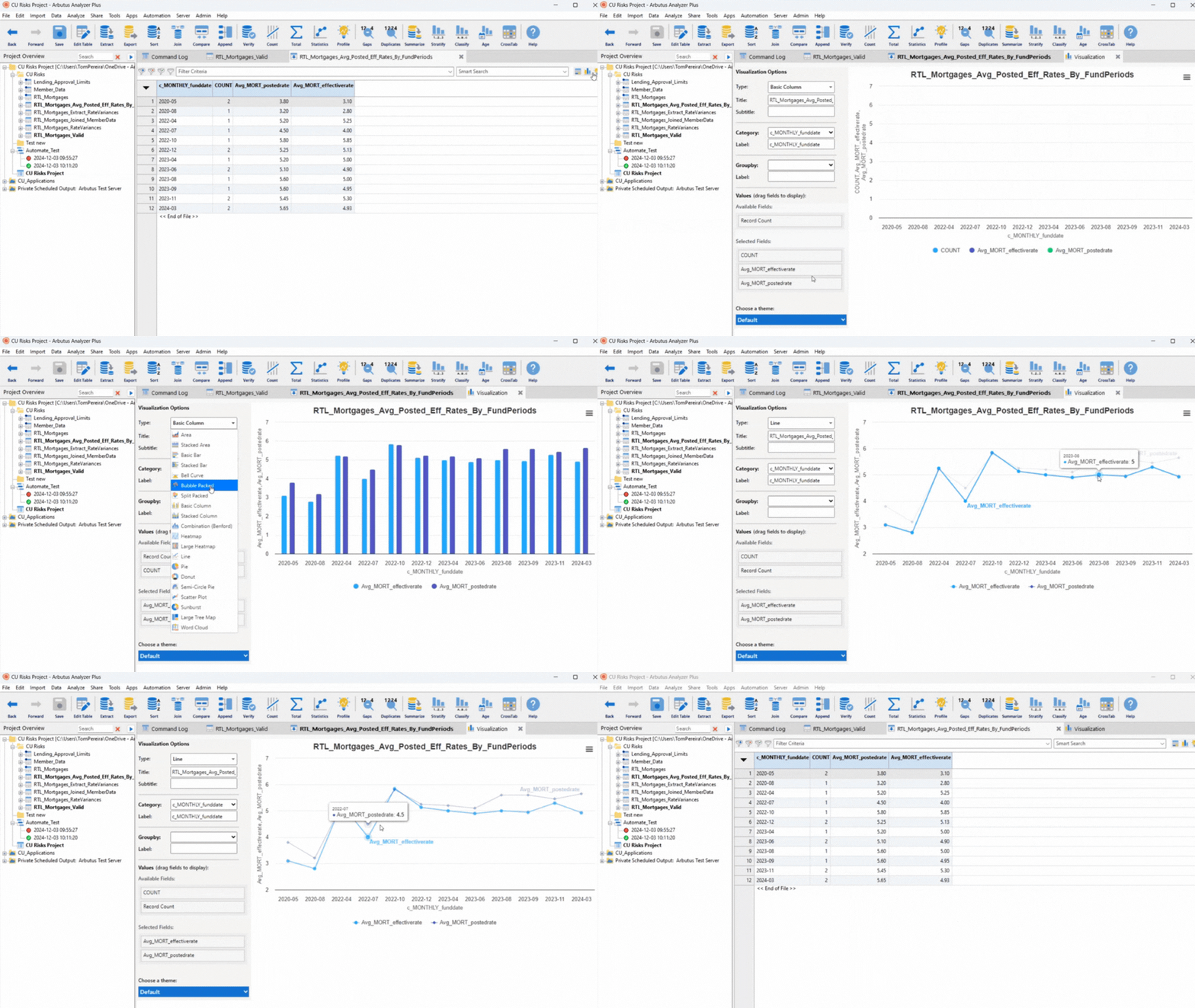
Credit Union Member Services - Rate Variances

Examiner Value 
This provides examiners with independent, population-based assurance that capital adequacy, interest rate risk, and liquidity management are supported by complete and reliable data. It also demonstrates that regulatory thresholds and internal risk limits are being monitored continuously, and that stress-testing and contingency planning are executed and documented in support of NCUA safety-and soundness supervisory expectations. 

Management Value 
This provides management with timely, data-driven insight into capital strength, interest rate sensitivity, and liquidity resilience. These insights help management take proactive action to address emerging exposures, validate stress-testing assumptions, and maintain compliance with internal limits and 
regulatory thresholds.


Example Analytics and Testing (with Arbutus)

Designed to support testing and monitoring activities commonly associated with NCUA supervisory and examination expectations 

» Independent recalculation of net worth and capital ratios using general ledger and sub-ledger data to validate accuracy, completeness, and Prompt Corrective Action (PCA) classification

» Capital adequacy trend and concentration analysis to identify early signs of deterioration or heightened exposure prior to supervisory thresholds being breached 

» Reconciliation of Call Report figures to underlying source systems to detect inconsistencies, manual adjustments, or data integrity issues

» Interest rate risk (IRR) analytics, including recalculation of repricing gaps, earnings-at-risk, and net economic value (NEV) sensitivity using independent data extracts 

» Validation of Interest Rate Risk (IRR) and Asset Liability Management (ALM) model inputs and assumptions, including rate curves, repricing schedules, and behavioral assumptions, to reduce model
risk 

» Scenario-based stress testing of earnings, capital, and liquidity, simulating adverse interest rate, credit, and funding conditions

» Liquidity position and cash-flow analytics, assessing the availability, timing, and reliability of inflows
and outflows under normal and stressed conditions

» Testing of contingency funding plan assumptions, using historical data and hypothetical stress scenarios to evaluate feasibility and responsiveness

» Data quality profiling of inputs used in capital, IRR, and liquidity models, including completeness, accuracy, and consistency checks

» Population-based testing of funding sources and concentrations, identifying reliance on volatile or non-core funding
» Repeatable, scheduled analytics to support continuous monitoring rather than point-in-time validation

» Preservation of analytics logic, parameters, and evidence to support examiner review, independent
reperformance, and longitudinal analysis Identifying sources of data quality issues in funds transfer pricing models and other pricing model


Technology and Cybersecurity Risk

Rapid technological change and evolving cyber threats increase the risk of losses, service disruptions, supervisory findings, or reputational damage arising from ineffective design or execution of controls over information systems, access management, change management, and supporting infrastructure. 

Within U.S. credit unions, technology and cybersecurity risk are key supervisory focus areas, as deficiencies in IT governance, system security, or data protection may impair safety and soundness, compromise member data, or disrupt critical services. 

Effective management of this risk requires appropriately designed and implemented IT controls, strong governance and accountability, and continuous, data-driven monitoring to validate that controls are operating effectively and remain responsive to emerging cyber and fraud threats and regulatory expectations.

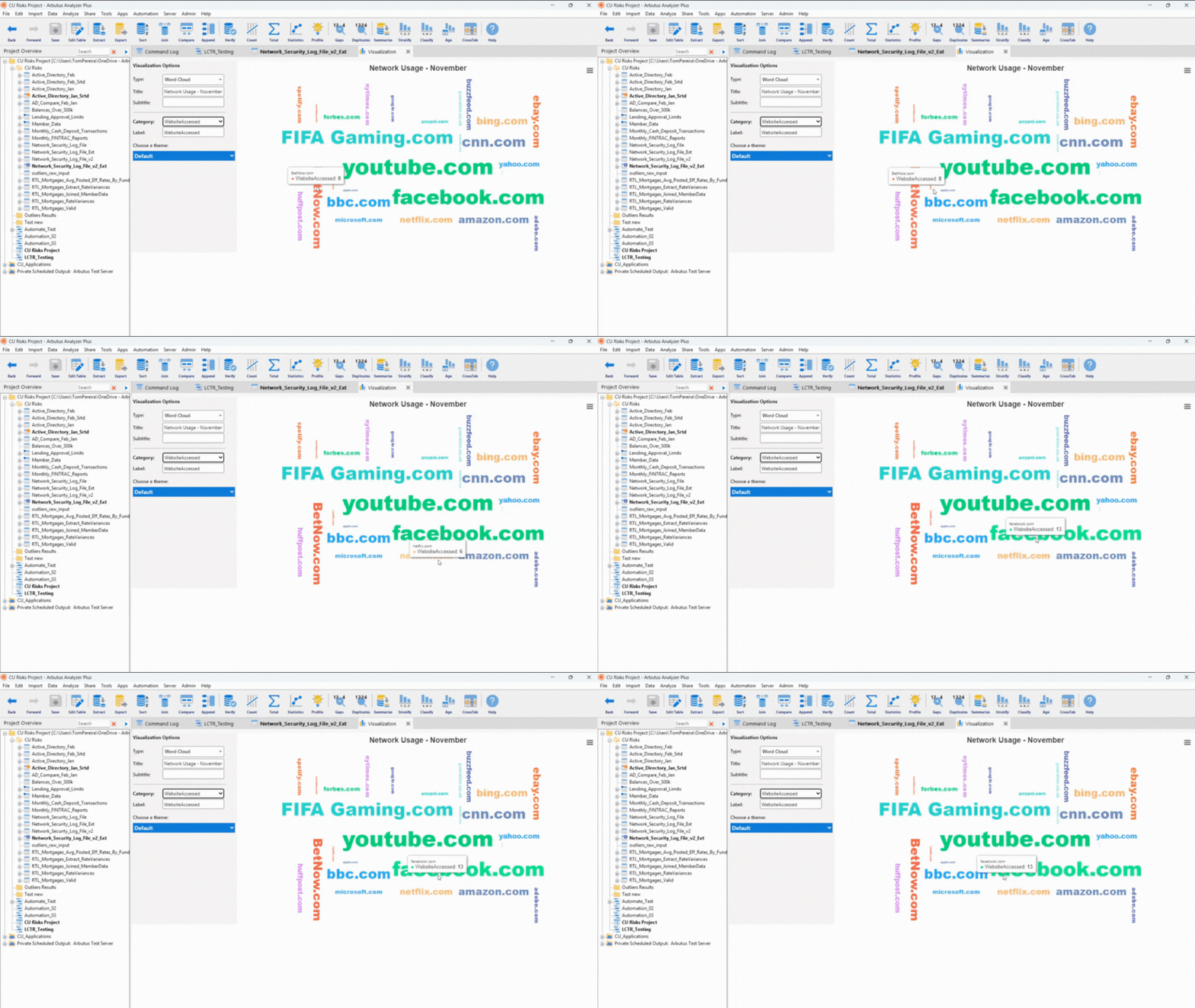
IT & Network Security Risk Chart

Examiner Value 
This provides examiners with independent, population-based assurance that technology and 
cybersecurity controls are appropriately designed, consistently executed, and continuously monitored across systems and environments. It also supports examiner confidence in IT governance, access management, change control, and cyber threat detection, while enabling transparent re-performance, defensible issue management, and reduced IT and cybersecurity examination findings consistent with NCUA and FFIEC supervisory expectations. 


Management Value 
This provides management with timely, data-driven insight into access risk, control execution, and 
emerging cyber threats. These insights help management remediate weaknesses proactively before they 
result in service disruption, data compromise, or supervisory findings.

 
Example Analytics and Testing (with Arbutus)
Designed to support testing and monitoring activities commonly associated with NCUA and FFIEC 
supervisory and examination expectations.

» User access population testing to identify orphaned, dormant, excessive, or incompatible privileges across core banking systems, Active Directory, ancillary applications, databases, and infrastructure platforms

» HR-to-system access reconciliation to validate timely provisioning, modification, and removal of access following employee onboarding, role changes, or terminations 

» Segregation-of-duties (SoD) testing within and across applications supporting financial, operational,
and administrative processes

» Change management analytics to identify unauthorized, emergency, or undocumented system changes and deviations from approved change workflows

» Privileged access and administrator activity monitoring to detect anomalous behavior, elevated risk actions, or policy violations

» Log and event data analysis to identify unusual patterns, control failures, or indicators of potential cyber threats

» Third-party and vendor access testing to validate appropriate access levels, usage patterns, and monitoring of vendor activityn

» IT asset inventory testing to validate the completeness, accuracy, ownership, and security classification of hardware, software, and infrastructure assets supporting critical operations

» Data integrity testing to identify unauthorized changes, corruption, or inconsistencies affecting critical systems and regulatory reporting

» Cross-system consistency testing to validate alignment between identity platforms, security tools, and source systems

» Repeatable, scheduled analytics to support continuous monitoring rather than point-in-time reviews

» Preservation of audit logic, parameters, and evidence to support examiner review, independent re-performance, and longitudinal analysis




Strengthen your credit union’s operations and member services with data you can trust.

See how Arbutus Data Analytics Software helps you unlock deeper insight, enhance testing, and improve compliance across your organization. Connect with our solution team to review your requirements and explore how Arbutus can advance your credit union’s analytics capabilities.

Request a Trial