.webp?width=296&height=131&name=arbutus_AI-Powered-Advanced-Analytics%20(1).webp)
Earlier Risk Detection
Identify issues before they escalate

Earlier Risk Detection - Identify risks, control failures, policy violations, and unusual activity sooner.
Continuous Visibility - Gain ongoing insight into transactions, controls, and business activities across the organization.
Stronger Oversight and Governance - Monitor risks and controls more proactively rather than relying solely on periodic reviews.
Broader Transaction Coverage - Analyze larger volumes of data and activity across multiple systems.
Improved Audit Effectiveness & Agility - Support more responsive, data-driven audit and assurance activities.
Enhanced Risk Visibility - Provide management with a more complete and timely view of risks, trends, and emerging risks and areas of concern across business processes and operations.
Faster Access to Actionable Insights - Enable more timely investigation, response, and decision-making.

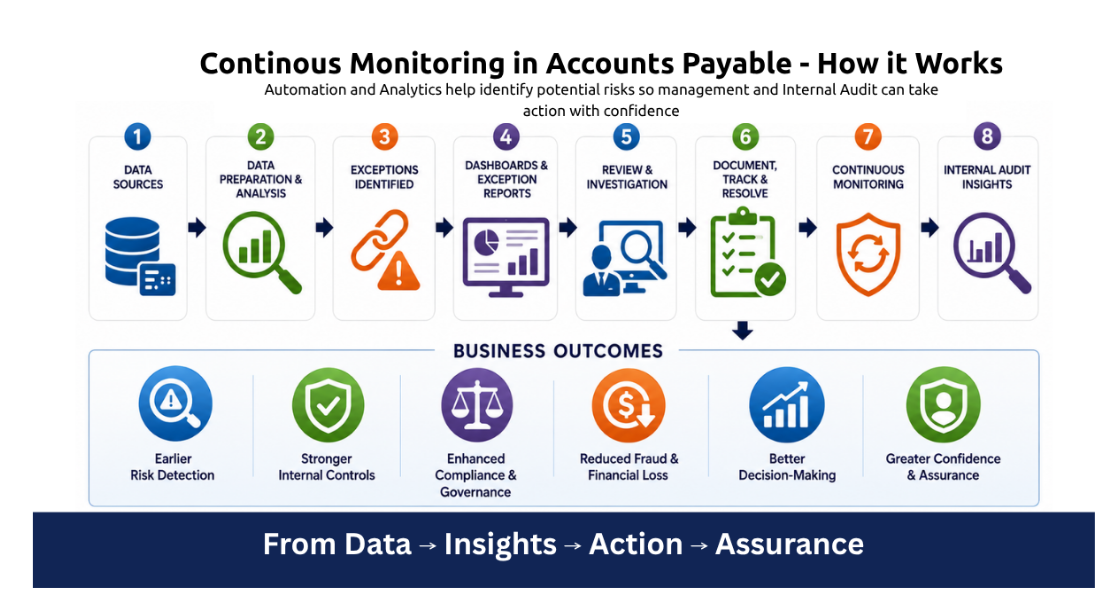
Employee + Vendor Data → Automated Analytics → Relationship/Exception Detected → Management & Internal Audit → Action → Continuous Monitoring
Using Automated Analytics, organizations can continuously monitor controls, risks, and business activities across areas such as finance, operations, compliance, fraud, and technology. The examples in this guide show how organizations use analytics to improve oversight, strengthen governance, and make better decisions.
The results help management identify and manage risks and ensure controls are working effectively. Internal Audit can also use similar analytics to identify emerging risks, assess control effectiveness, review how exceptions are handled, and determine whether further audit work is needed.
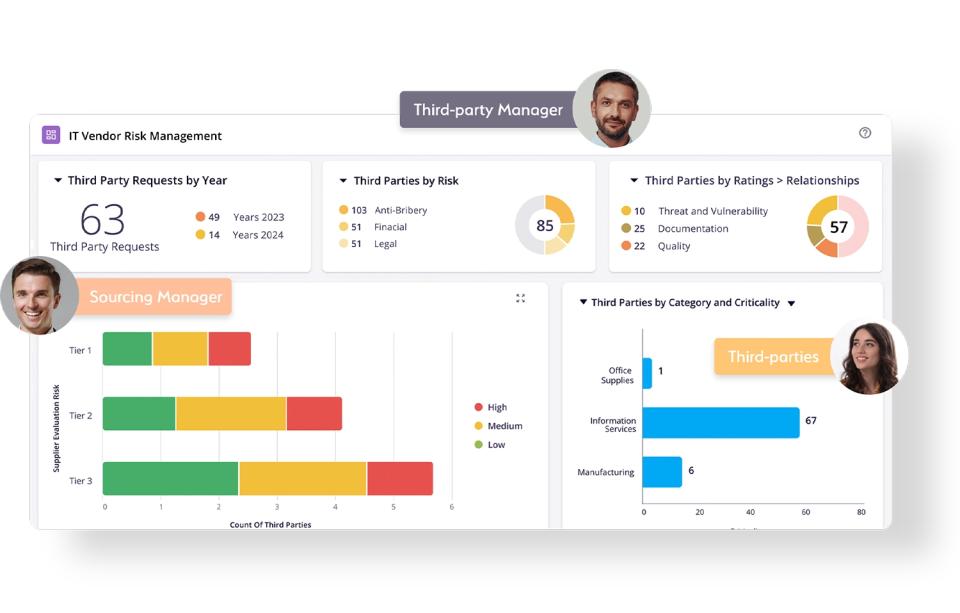
Accounts Payable management may implement an automated analytic that periodically receives vendor master and transaction data from the ERP system.
The data is cleansed, standardized, and analyzed using predefined, risk-based matching rules to identify potential relationships between vendors and employees.
During routine monitoring, vendors with matching bank account, address, or other identifying information are automatically flagged and presented through dashboards and exception reports.
Accounts Payable management reviews these exceptions to determine whether they represent legitimate business relationships, policy violations, control weaknesses, conflicts of interest, or potential fraud.
Exceptions are investigated, documented, and tracked through resolution where remedial action is required.
Management uses these monitoring results to support its ongoing responsibility for effective risk management and control oversight.
Internal Audit may leverage similar analytics as part of continuous auditing activities to identify emerging risks, assess control effectiveness, evaluate management's response to exceptions, and determine whether additional assurance procedures are warranted.